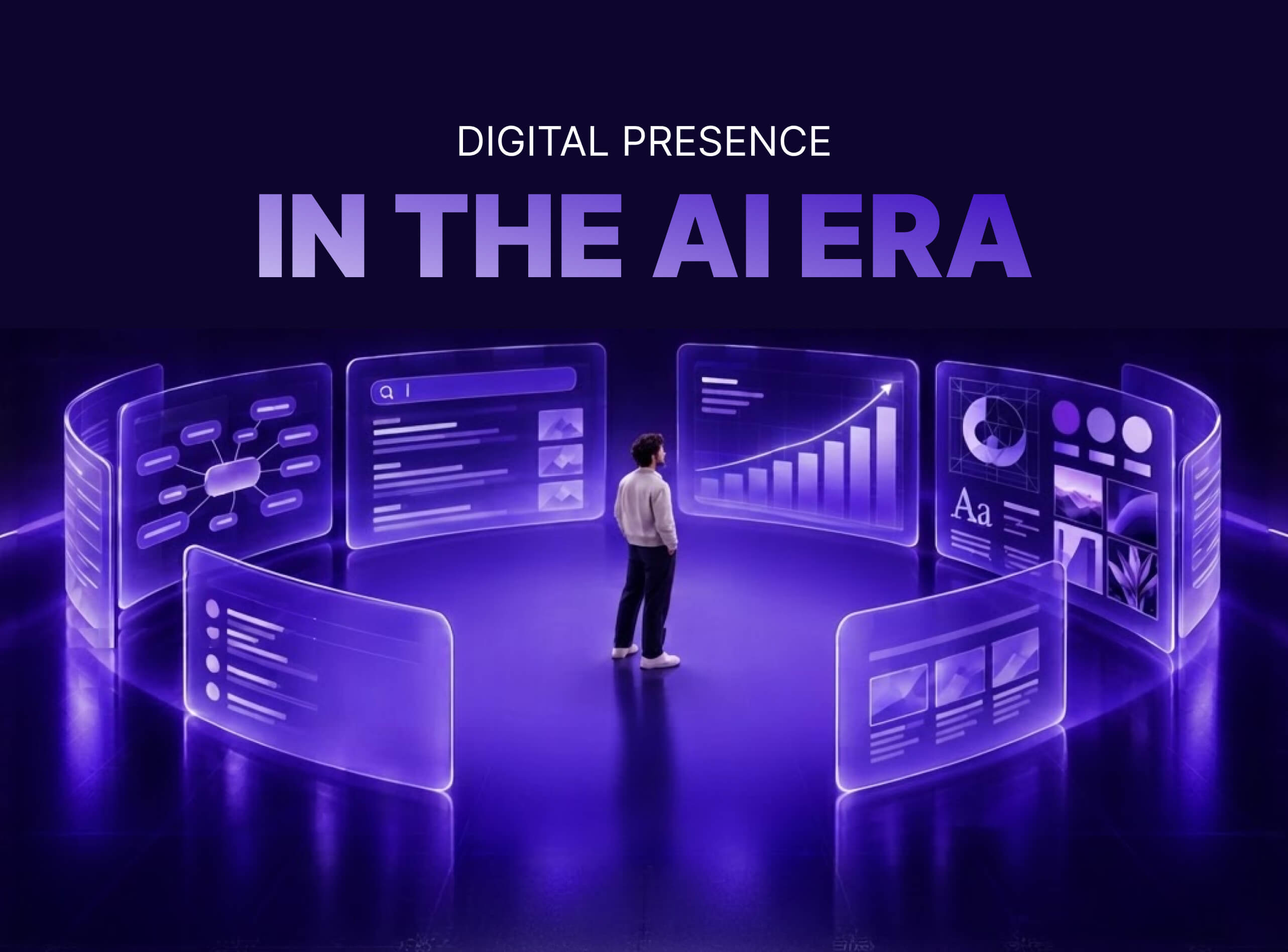
From Generative Engine Optimization to AI Brand Intelligence: how brands’ digital presence is changing
Artificial intelligence is changing more than just how we search for information. Generative Engine Optimization (GEO)has emerged from the need to rethink brand visibility in new AI-powered search environments.
With ChatGPT, Gemini, Claude, Google AI Overviews and similar tools now widely used every day, the question is no longer just “How do I appear on Google?” but also “How does AI learn about and describe my brand?”
GEO is a first step towards this new dimension of search. But appearing in AI-generated answers does not necessarily mean being represented accurately.
From visibility to positioning
A brand can appear in AI-generated answers while being described incompletely, associated with a competitor or linked to outdated information.
Generative systems build their answers by connecting the information they find online. That is why, beyond asking whether a brand appears, it is becoming essential to understand how it is represented.
The distinction is subtle but fundamental:
- AI Visibility: the brand is found and cited.
- AI Brand Perception: the brand is described and interpreted in a particular way.
AI Brand Perception: how your company is portrayed
AI Brand Perception analyses a brand’s image and reputation in generative AI responses, focusing on four elements:
- Presence: the contexts in which the brand is mentioned and how often it appears;
- Competitors: the companies it is associated with or compared against;
- Attributes: the characteristics and values attributed to the brand;
- Accuracy: whether the information is correct, outdated or incomplete.
The aim is to identify and close the gap between a company’s identity and how AI engines represent it. For example, a brand may want to be recognised for a particular specialism, yet fail to be associated with that category in AI-generated answers. Or it may be correctly cited but described using outdated information.
To gain a deeper understanding of a brand’s market positioning, competitive intelligence tools such as Strateego.AI help businesses observe and compare signals from competitors: from tone of voice and the topics they cover to share of voice, reputation and gaps in communication.
Beyond visibility: the evolution of AI Brand Intelligence
While GEO provides the tactics for being found by generative engines and AI Brand Perception measures the quality of that representation, AI Brand Intelligence provides a strategic approach to managing how a company is portrayed by generative engines, going beyond monitoring alone.
To achieve this, traditional SEO now needs to be combined with GEO and AEO (Answer Engine Optimization) strategies, focusing on three key areas:
- GEO & AEO strategy: optimising content for concise AI-generated answers and AI search queries;
- Authoritative source: positioning the brand as a trusted reference within its industry;
- Direct citation: ensuring the company’s products, services and solutions are accurately represented in generated results.
The goal is to help businesses become discoverable through AI and ensure they are accurately described, with their strengths clearly conveyed.
The next step
Digital presence is no longer measured solely by first-page rankings on Google, but also by how accurately AI summarises and describes your business.
At Archibuzz, we help businesses navigate this transition by analysing their visibility in generative engines and developing tailored Brand Intelligence, SEO, GEO and AEO strategies.
Contact us to analyse your digital presence!